Travel tips
Workcation by ferry in October: 5 ideal destinations
A workcation by ferry in October means combining remote work, slow travel and destinations that are still pleasant outside the high season. It is the right time to set off with your laptop in your backpack, enjoy mild temperatures and plan productive days without giving up the sea.
07 October 2026
What a workcation is and why October is ideal
A workcation is a stay that combines remote work and holiday: you work during set hours and use the rest of the day to explore, relax or experience a destination at a slower pace.
October is one of the best months to try it because:
- the climate stays mild in many Mediterranean cities;
- prices for accommodation, ferries and services are often lower than in August;
- destinations are less crowded, so it is easier to find the quiet you need to work;
- restaurants, museums and urban spaces are more enjoyable;
- travelling by ferry lets you bring more luggage and work equipment, with greater flexibility.
How to choose a destination
For a truly effective workcation, a beautiful destination is not enough: you need a practical city with good connections and services suited to everyday work.
Before booking, consider these aspects:
- Wi-Fi and mobile coverage: check the quality of the connection in your accommodation, in cafés and in public spaces.
- Coworking spaces and work-friendly cafés: useful if you want to alternate between home, hotel and professional workstations.
- Cost of living: October helps, but some destinations remain more expensive than others.
- Ferry connections: check frequency, crossing time and arrival ports.
- Pace of the city: a good workcation requires a balance between productivity, relaxation and access to services.
Cagliari: workcation between the sea, historic districts and urban services
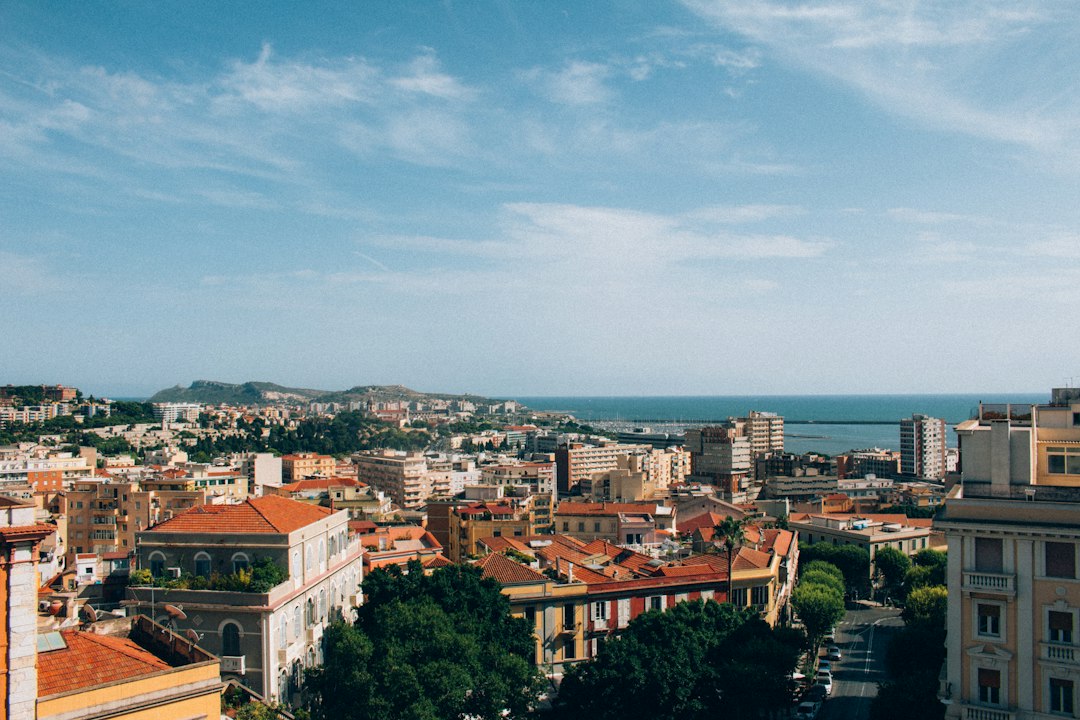
Photo by James Butterly on Unsplash
Cagliari is one of the most interesting destinations for a workcation by ferry in October. The city offers a balanced mix of sea, urban life, restaurants, historic districts and quiet spaces to work. Temperatures are often still pleasant, allowing outdoor breaks, walks along Poetto beach or work sessions in bright cafés.
For remote work, the best base is Marina, Villanova or Stampace, the historic neighbourhoods close to the port and to services. Workspaces include Villanova Coworking (Via San Saturnino 7), with open-space desks and meeting rooms. Near Largo Carlo Felice there is also a Regus centre with meeting rooms bookable by the hour.
Main arrival ports: Port of Cagliari; alternatively, for itineraries around Sardinia, Olbia and Porto Torres can also be useful depending on the route.
Getting there from Italy: Grimaldi Lines connects Cagliari with Civitavecchia (about 13 hours) and Naples (about 15 hours); there is also a weekly sailing from Palermo (about 12 hours).
Ajaccio: a relaxed workcation in the heart of Corsica
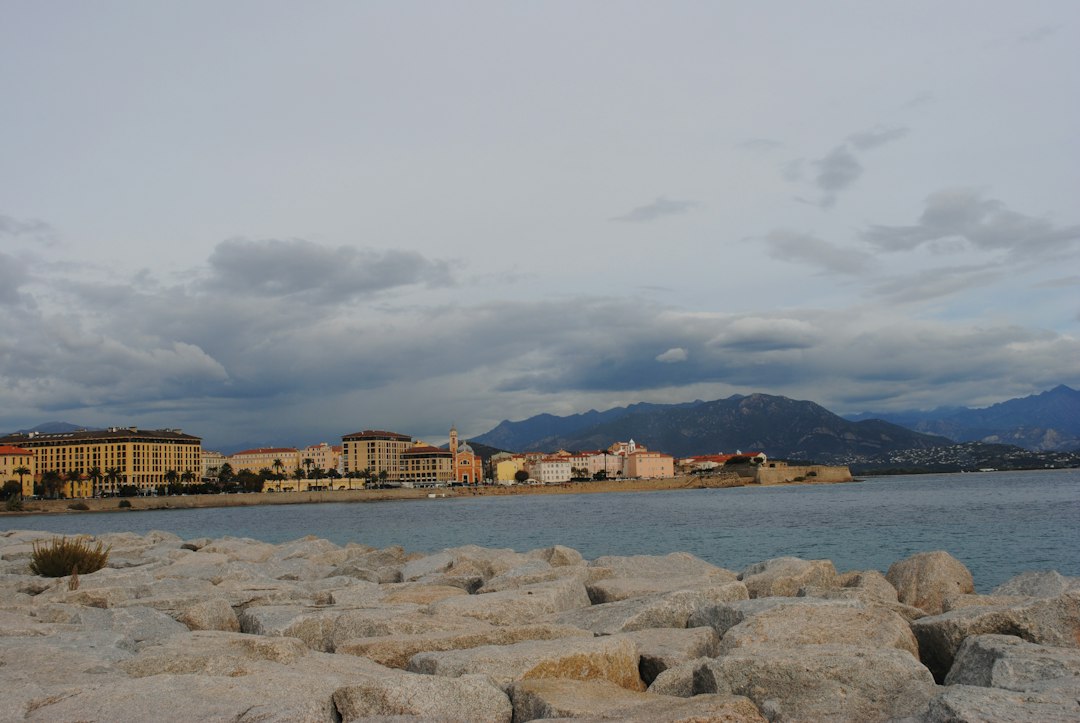
Photo by JR Harris on Unsplash
Ajaccio is perfect for those who want a slower workcation, with days shaped by work, the sea, walks and nature. In October Corsica is less crowded and keeps an authentic atmosphere, ideal for anyone who needs to concentrate.
The city is easy to explore on foot: the old town, Cours Napoléon and Place Foch are a few minutes from the port, and the Route des Sanguinaires is perfect for a seaside walk at the end of the day. For a fully equipped workstation there is myWO Ajaccio (20 Boulevard Georges Pompidou), with open space, meeting rooms and high-speed Wi-Fi. To discover the city, read our guide to Ajaccio in October.
Main arrival ports: Port of Ajaccio; in Corsica, Bastia, Porto-Vecchio and L’Île-Rousse are also useful depending on the route and departure point.
Getting there from Italy: the most convenient direct route in autumn is Porto Torres–Ajaccio with Corsica Ferries (about 4 hours 45 minutes). Alternatively, sail to Bastia from Livorno or Savona and continue across the island by car or train.
Palermo: a creative workcation between culture, street food and the sea
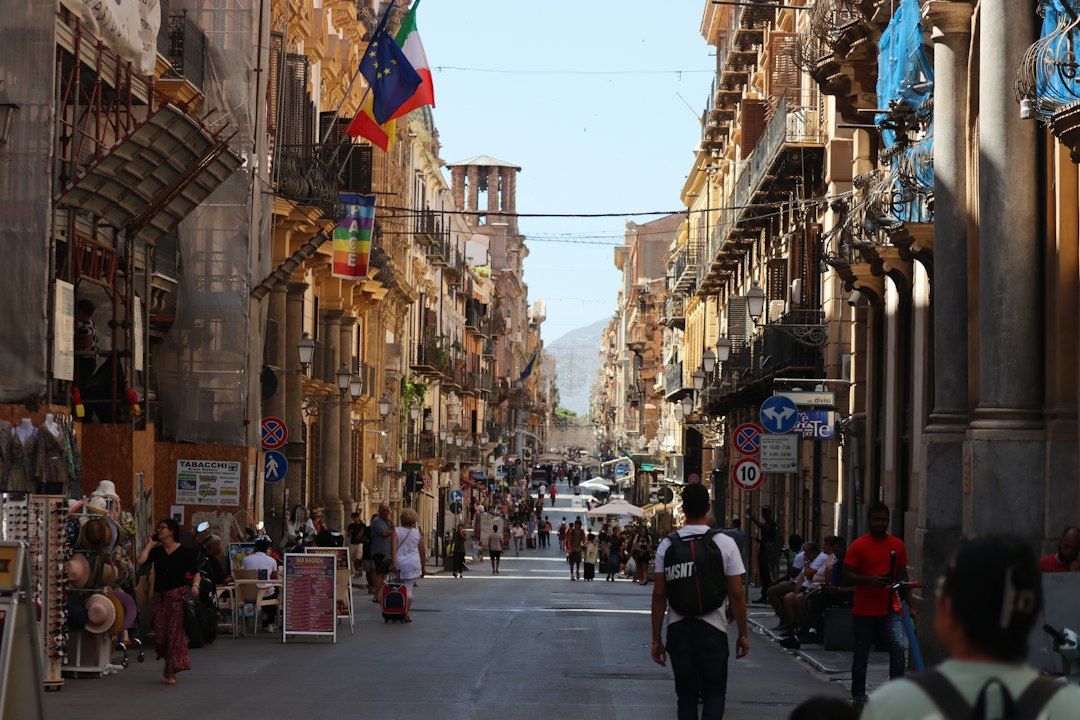
Photo by Stefano Huang on Unsplash
Palermo is an ideal destination for those looking for energy and culture. In October the city is more liveable than in summer, with temperatures suited to working during the day and exploring neighbourhoods, markets and monuments in your free time.
For remote work you can choose between the old town (Kalsa, Ballarò, Vucciria), lively and full of cafés, and the Politeama–Libertà area, tidier and close to the port. Here, on Via Emerico Amari, you will find Magneti Cowork, open every day from 8 am to 8 pm, with shared desks and evening community events. For your free time, see our guide to things to do in Palermo.
Main arrival ports: Port of Palermo.
Getting there from Italy: sail from Naples (Tirrenia and GNV, overnight crossings all year round), Civitavecchia (GNV, about 14 hours), Livorno (Grimaldi Lines, about 18 hours) or Genoa (GNV, about 21 hours).
Palma de Mallorca: a Mediterranean workcation with modern infrastructure
Palma de Mallorca is well suited to remote work thanks to its lively neighbourhoods, several coworking spaces and an international community. In October the island is quieter, but the weather is still pleasant and many outdoor activities are still available.
As a base, Santa Catalina and the old town are walkable and full of cafés; Portixol and El Molinar, on the seafront, are quieter. Workspaces include Spaces Palma Marina, near the marina, The Hub Mallorca, west of the old town, and Palmapolitan, on the edge of the old city. Before you leave, find out what to see in Majorca.
Main arrival ports: Port of Palma de Mallorca; on the island Alcúdia is also useful and, for connections within the Balearics, Ibiza and Mahón.
Getting there from Italy: there are no direct ferries. Sail to Barcelona with Grimaldi Lines from Civitavecchia (about 21–23 hours) or Porto Torres (about 13 hours), then continue to Palma: about 7 hours with Trasmed or Baleària.
Olbia: a practical workcation to explore north-eastern Sardinia
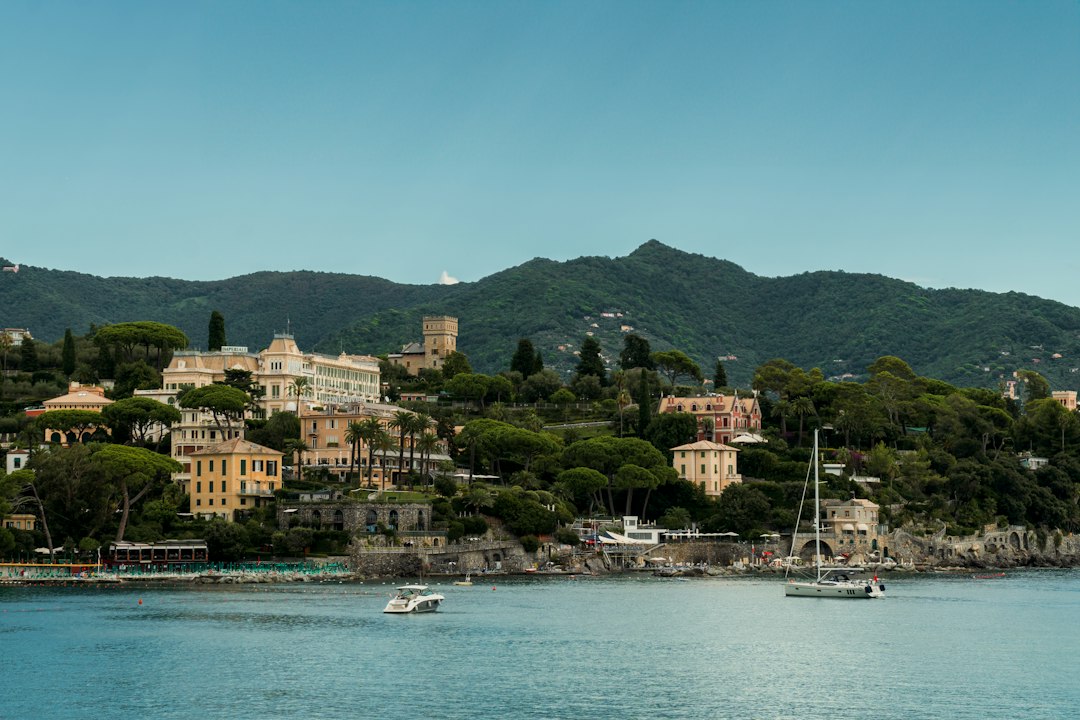
Photo by Dorin Seremet on Unsplash
Olbia is a practical choice for those who want a well-connected base and quick access to north-eastern Sardinia. In October the city is calmer and nearby resorts are less crowded.
The centre revolves around Corso Umberto, close to the Isola Bianca port, and is easy to enjoy on foot; Pittulongu beach is just a few kilometres away. Since May 2026 there has also been a Poste Italiane coworking space in the post office on Via Acquedotto, with private offices and open-space desks for professionals and companies. For weekend ideas, read our week in and around Olbia itinerary.
Main arrival ports: Port of Olbia; nearby alternatives include Golfo Aranci and Porto Torres for those planning wider itineraries in Sardinia.
Getting there from Italy: from Civitavecchia with Tirrenia (about 7 hours), from Livorno with Moby and Grimaldi Lines (about 8 hours) and from Genoa with Moby and GNV (11–13 hours).
Staying productive on board with Seafy during the crossing
Your workcation can start during the journey itself. On a ferry, crossing time can become a useful window to answer emails, prepare documents, plan meetings or handle light tasks before arrival.
On many ferries you will find Seafy, our on-board digital platform: during the crossing you can connect to Wi-Fi, where available, and handle emails, messages and light tasks without interruption. Our advice is to prepare offline files in advance, move non-essential calls and keep flexible working hours. To find out more, read our guides on how to work remotely on a ferry, ways to stay productive on ferries and how Wi-Fi boosts remote work on Mediterranean ferries.
On GNV, Grimaldi Lines and Corsica Ferries ships, the operators behind many of the routes in this article, on-board connectivity is provided by Seafy. Connect to the ship’s Wi-Fi, open the Seafy portal, choose a package and pay by card, Apple Pay or Google Pay. On many modern ships the signal also reaches the cabins, so you can work in peace away from the common areas.
To work better while travelling, bring:
- a power bank and charger;
- noise-cancelling headphones;
- documents also saved offline;
- a clear list of priorities;
- a comfortable workspace as soon as one is available on board.
Comparison of the 5 destinations
- Cagliari: for those who want city, sea and services. For work: historic neighbourhoods near the port, coworking in Villanova, the Poetto beach for breaks. Port: Cagliari.
- Ajaccio: for those seeking calm and nature. For work: compact, walkable centre, myWO coworking. Port: Ajaccio.
- Palermo: for lovers of culture and city life. For work: cafés in the old town, Magneti Cowork in the Politeama area. Port: Palermo.
- Palma de Mallorca: for those looking for an international atmosphere. For work: several coworking spaces between the centre and the seafront, Santa Catalina as a base. Port: Palma.
- Olbia: for those who want flexibility and mobility. For work: centre close to the port, coworking on Via Acquedotto, a base for exploring Sardinia. Port: Olbia.
Timetables and frequencies change with the season: in October some routes have fewer weekly sailings, so always check the operator’s schedule before booking.
FAQ
Is a workcation by ferry in October really good value?
Yes, October often offers more attractive fares than the high season. Accommodation can also cost less, especially if booked a little in advance.
Can I work during the ferry crossing?
Yes, especially if you plan tasks that do not require a constant connection. Where on-board Wi-Fi is available, including through our on-board digital services, you can handle emails, messages and light online tasks more continuously.
How do I choose a destination based on my budget?
Compare accommodation prices for your dates and add the cost of the crossing: in October fares can change a lot from one week to the next, so it pays to check them before you decide.
Is it better to choose an apartment or a hotel?
For stays of several days, an apartment can be more comfortable because it offers separate spaces and greater independence. A hotel is practical if you prefer included services and do not need a fixed workstation for many hours.
How long should a workcation last?
Ideally at least a week, but two or three weeks let you settle into the rhythm of the destination, work calmly and truly enjoy the trip.
Conclusion
A workcation by ferry in October is a smart way to travel, work and experience the Mediterranean outside the busiest periods. Cagliari, Ajaccio, Palermo, Palma de Mallorca and Olbia offer different options in terms of style, budget and work pace.
Before you leave, plan your connection, accommodation and schedule carefully. And to make the crossing productive too, discover the on-board digital services of Seafy and check the connectivity available on your ship.
Looking for more autumn ideas? Read also Where to go on holiday in October by ferry and Where to go in Europe in October by ferry.